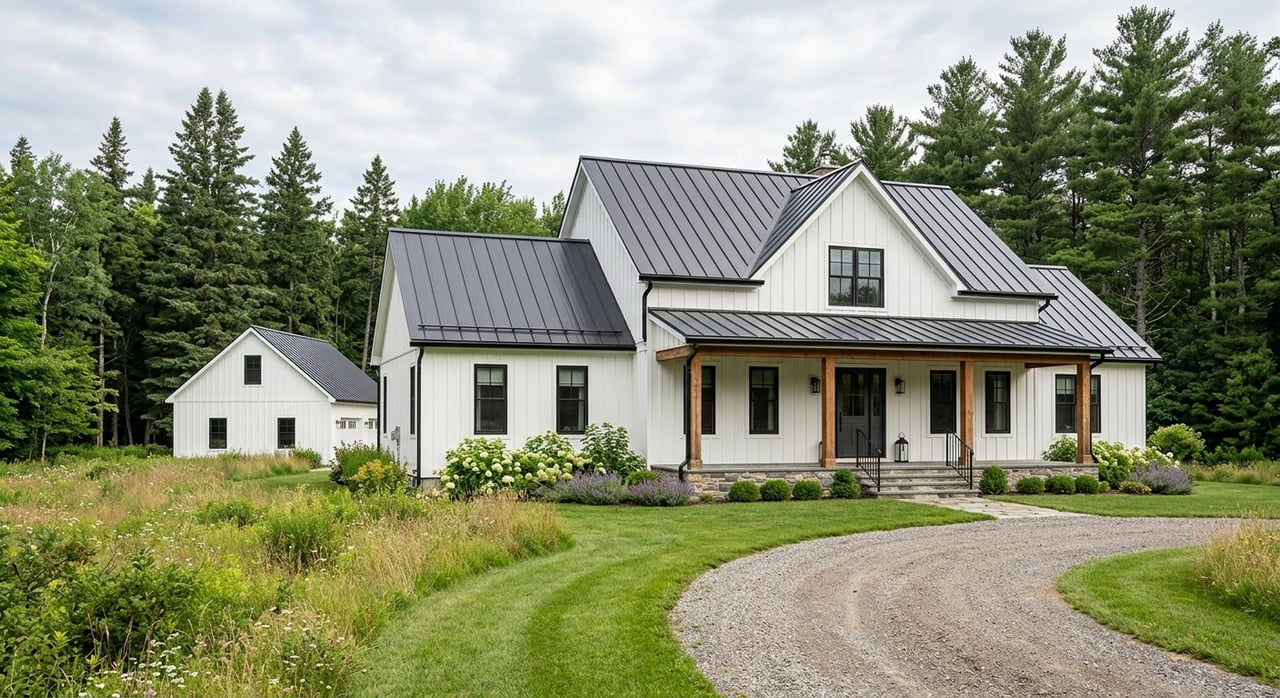
Dreaming about more land, more privacy, and a slower pace just outside the city? Buying a country home in Clarence-Rockland can be a great move, but rural properties come with questions that do not always show up in a typical suburban home search. If you want to avoid surprises, it helps to understand zoning, services, access, and how rural value really works before you make an offer. Let’s dive in.
Why country homes feel different
A country home in Clarence-Rockland is often more than just a house on a bigger lot. You may be looking at a rural residential property, a larger acreage, an agricultural parcel, an equestrian setup, or a property with forestry-related uses. That variety is part of the appeal, but it also means each property can come with very different rules and day-to-day needs.
In Clarence-Rockland, planning rules are not the same across the whole city. Rockland is covered by the city’s urban Official Plan, while rural and agricultural areas, along with villages like Clarence Creek, Hammond, Cheney, Bourget, Clarence Point, and St-Pascal, fall under the United Counties of Prescott and Russell Official Plan. On top of that, the city’s zoning by-law applies to all lands and controls uses, lot sizes, setbacks, heights, and other standards.
Start with zoning before tours
If you are shopping for a country home, one of the smartest first steps is to confirm the property’s zoning before you get attached. In rural areas, two homes on the same road can have very different permissions depending on the exact zone and any site-specific exception.
A practical way to screen properties early is to use the United Counties interactive planning map. It can help you check zoning, Official Plan land uses, soil capability, and road location before you book tours. That simple step can save time and help you focus on properties that match your goals.
Why the exact zone matters
Clarence-Rockland’s zoning by-law is the legal framework for what you can and cannot do with a property. It regulates permitted land uses, building placement, lot dimensions, and setbacks from lot lines and waterbodies. If the use you want is not allowed, you may need a zoning amendment.
This matters because many buyers want more than a house. You may want space for animals, a workshop, a second dwelling, a home-based business, or a short-term rental. In rural areas, those uses can be possible, but only if the zone allows them.
What RU and AG zones can mean
The RU, or Rural Residential, zone permits detached dwellings. It may also allow uses like agriculture, equestrian establishments, and forestry operations, depending on the property and the by-law standards. The minimum lot area can vary based on use, including 0.4 hectares for a detached dwelling and 10.0 hectares for agriculture, equestrian, or forestry uses.
The AG, or Agricultural, zone has its own standards. The by-law shows large minimum lot requirements for agricultural uses, including 40.5 hectares for agriculture and 4.0 hectares for some agriculture-related uses. It also includes a detached dwelling category with a 0.4-hectare minimum lot area and a 2.0-hectare maximum lot area.
That means acreage alone does not tell you the full story. The better question is whether the lot supports your intended use now and later.
Know your water and wastewater setup
Many country homes in Clarence-Rockland are not connected to full municipal water and sewer. Instead, they may rely on private individual services, which the city defines as well and septic. That is normal in rural areas, but it does shift more responsibility to you as the property owner.
Ontario treats septic systems as on-site wastewater treatment systems that fill the role municipal sewers would serve in urban areas. The owner is responsible for operating and maintaining the system. For buyers, that makes service records and basic system information very important.
What to ask about wells
When viewing a rural property, ask for:
- The age of the well
- The most recent water test
- The well record, if available
- Any maintenance or repair history
Ontario requires well owners to maintain wells so surface water and foreign material do not enter them. The province also offers free private well water testing through Public Health Ontario or a local public health unit, though that testing focuses on indicator bacteria rather than every possible contaminant.
What to ask about septic
For septic systems, ask for:
- The age of the system
- The last pump-out date
- Any maintenance records
- Any repair or replacement history
Ontario guidance notes that septic tanks are commonly pumped every 3 to 5 years. A missing record is not always a deal-breaker, but it is something you will want to clarify before moving forward.
Check roads, access, and winter conditions
A country property can feel perfect in summer and very different in January. That is why road type, driveway length, and winter maintenance should be part of your decision early on.
Clarence-Rockland’s Public Works team maintains municipal roads, sidewalks, bridges, culverts, and drainage ditches. Winter service includes salting, sanding, snow plowing, and snow removal. However, the city uses different winter service levels for rural local and gravel roads, so access conditions can vary depending on the road class.
If a home is on a private road or has a long driveway, ask how winter access is handled and who is responsible. This is especially important if you commute regularly or want dependable year-round access.
Confirm waste and service details
The city provides curbside waste services and operates a landfill site in Bourget. Even so, rural buyers should confirm the exact collection setup for the specific address they are considering.
Small service details can affect daily life more than buyers expect. Pickup schedules, drop-off needs, and the distance to routine services can all shape how practical a property feels once you live there.
Watch for environmental constraints
Rural lots often offer more space, but they can also come with more land-related restrictions. In some cases, these matter more than the house itself.
Clarence-Rockland’s by-law indicates that development can be restricted on flood-prone land, steep slopes, unstable slopes, wetlands, significant wildlife habitat, woodlands, ravines, valleys, shorelines, natural corridors, and archaeological resource sites. Some regulated areas may also require permits from a conservation authority or another authority with jurisdiction.
If you are thinking about adding an outbuilding, expanding the house, or making major site improvements later, these constraints should be reviewed early. A large lot does not always mean a fully usable lot.
Understand extra dwelling rules
A lot of buyers ask whether a country property can support an additional residential unit. In some cases, the answer is yes, but rural rules can be more complex than expected.
For some additional residential units in rural or agricultural zones, the by-law requires at least 8,000 square metres of lot area plus a hydrogeological and terrain analysis that includes an interference impact assessment. If your long-term plan includes extra living space, it is important to verify those requirements before you buy.
Rural value is about more than acreage
Country home pricing often feels less straightforward than suburban pricing. That is because value is not based only on the house size and finish level.
MPAC says residential assessments are based on comparisons to similar recent sales and that many factors can affect value. In rural settings, site features such as hydro services, sanitary services, access, driveway and parking, topography, and waterfront characteristics can all influence how a property is assessed.
Outbuildings also matter. Garages, sheds, pools, and other uncommon structures may be valued differently than the main home. In some cases, they are assessed using replacement cost less depreciation rather than the same approach used for a standard house.
Farm classification is not automatic
A larger parcel is not automatically taxed or classified as a farm. MPAC notes that farm properties are assessed using farm-specific factors such as soil quality, residence, and outbuildings, and farm tax class is tied to approval in the Farm Property Class Tax Rate Program.
Parts of a property can also be classified differently if some of the land is used for non-farm purposes. If you are buying acreage with a specific tax or use assumption in mind, that assumption should be verified carefully.
Smart questions to ask on tours
Before or during a showing, try to get clear answers to these questions:
- What is the exact zoning, and are there any site-specific exceptions, holds, or overlays?
- Is the property on municipal services, partial services, or private well and septic?
- If private, what are the ages of the well and septic, and what records are available?
- What is the road type, and what winter maintenance level applies?
- Is your intended use allowed, such as animals, a workshop, a second dwelling, a home-based business, or short-term rental use?
- Are there known drainage issues, flood exposure, slope limits, or other environmental constraints?
- Is there permit history for additions, outbuildings, septic work, or well work?
These questions help you move beyond the photos and understand how the property actually functions.
Why local guidance matters
Buying a country home in Clarence-Rockland is not just about finding a house you like. It is about matching the property to the way you want to live, while making sure the land, services, and rules all support that plan.
That is where local market knowledge can make a real difference. When you work with someone who understands rural listings, zoning context, and what to verify early, you can make a more confident decision and avoid costly surprises.
If you are thinking about buying a country home in Clarence-Rockland or the surrounding area, Steve Brunet can help you evaluate the property, ask the right questions, and move forward with clear, practical advice.
FAQs
What should you check before buying a country home in Clarence-Rockland?
- Confirm zoning, service type, well and septic details, road access, winter maintenance, environmental constraints, and permit history before making an offer.
What zoning issues matter for rural homes in Clarence-Rockland?
- The exact zone, any site-specific exceptions, and whether your intended use is allowed all matter because rural properties can have very different permissions even on the same road.
What should you ask about a private well in rural Ontario?
- Ask for the well age, latest water test, well record if available, and any maintenance or repair history.
What should you ask about a septic system when buying a rural home?
- Ask for the septic age, last pump-out date, maintenance records, and any repair or replacement history.
Can you add a second dwelling to a rural property in Clarence-Rockland?
- Sometimes, but some rural and agricultural properties require at least 8,000 square metres of lot area plus hydrogeological and terrain analysis requirements, so you need to verify the specific property first.
Does more acreage mean a property is taxed as a farm in Ontario?
- No. Acreage alone does not automatically create farm classification or farm tax treatment, and those details should be confirmed based on the property’s actual classification and approvals.